The Evolution of Eye Tracking in Scientific VR Research for 2026
Virtual reality (VR) has transformed from a niche technology into an indispensable tool across numerous scientific disciplines. For over a decade, fields like cognitive psychology, behavioral science, human factors, and ergonomics have leveraged VR's capacity to create controlled, immersive environments. This innovation allows researchers to conduct experiments with enhanced ecological validity while maintaining the rigorous controls of a laboratory setting. However, as we look towards 2026, it's the sophisticated integration of eye tracking technology into VR headsets that is truly revolutionizing the landscape of scientific inquiry.
The ability of an eye tracking VR headset to capture real-time visual attention data within dynamic, interactive simulations offers unprecedented insights into human perception, cognition, and behavior. As both VR and eye tracking hardware continue their rapid advancements in fidelity, usability, and seamless integration, their utility in research is not merely well-established but poised for an explosive expansion across an even broader spectrum of disciplines.
Gone are the days when researchers had to rely solely on subjective self-reports or constrained traditional lab setups. Today, participants can be immersed in highly realistic virtual environments, and their exact gaze patterns—where they look, what they focus on, and how their visual attention shifts in response to stimuli—can be precisely tracked. This capability introduces a new level of objectivity and ecological validity to scientific experiments, allowing for deeper, more nuanced understanding of human interaction with complex environments and tasks.
The Transformative Power of Eye Tracking in Scientific VR Research
The true power of an eye tracking VR headset in scientific research lies in its capacity to unlock objective behavioral data that was previously difficult or impossible to acquire. In fields such as cognitive psychology, researchers can meticulously analyze visual search strategies, decision-making processes, and the allocation of attention under various cognitive loads. For behavioral science, understanding social interactions, habit formation, or even consumer behavior becomes significantly more robust when precise gaze data complements other biometric inputs.
Human factors and ergonomics benefit immensely by simulating complex interfaces, industrial settings, or vehicle cockpits, allowing for the optimization of design based on where users naturally direct their attention, identify pain points, or experience visual confusion. For instance, in a study evaluating a new aircraft cockpit layout, eye tracking can reveal if pilots are efficiently locating critical instruments or if certain displays are being overlooked under stressful conditions. This level of granular data collection moves research beyond observational inference, providing concrete evidence of visual engagement and cognitive processing.
The ecological validity offered by VR allows for experiments to mimic real-world scenarios with remarkable accuracy, while eye tracking ensures that participants' naturalistic responses are recorded with scientific precision. This creates a powerful synergy, enabling researchers to explore complex phenomena—from spatial navigation to emotional responses to virtual stimuli—with a richness of data that traditional methods simply cannot match. It’s about measuring what people actually do, rather than just what they say they do.
Key Features to Consider When Choosing an Eye Tracking VR Headset for Research
Selecting the optimal eye tracking VR headset for scientific research in 2026 demands careful consideration beyond mere price or popularity. The unique requirements of academic and industrial research labs necessitate specific features to ensure data integrity and experimental validity. Here's what discerning researchers should prioritize:
- Gaze Tracking Precision and Accuracy: This is paramount. Look for headsets with high angular accuracy (e.g., <0.5 degrees), low latency, and robust drift correction. Consistency in calibration across different users and sessions is also critical for reliable data.
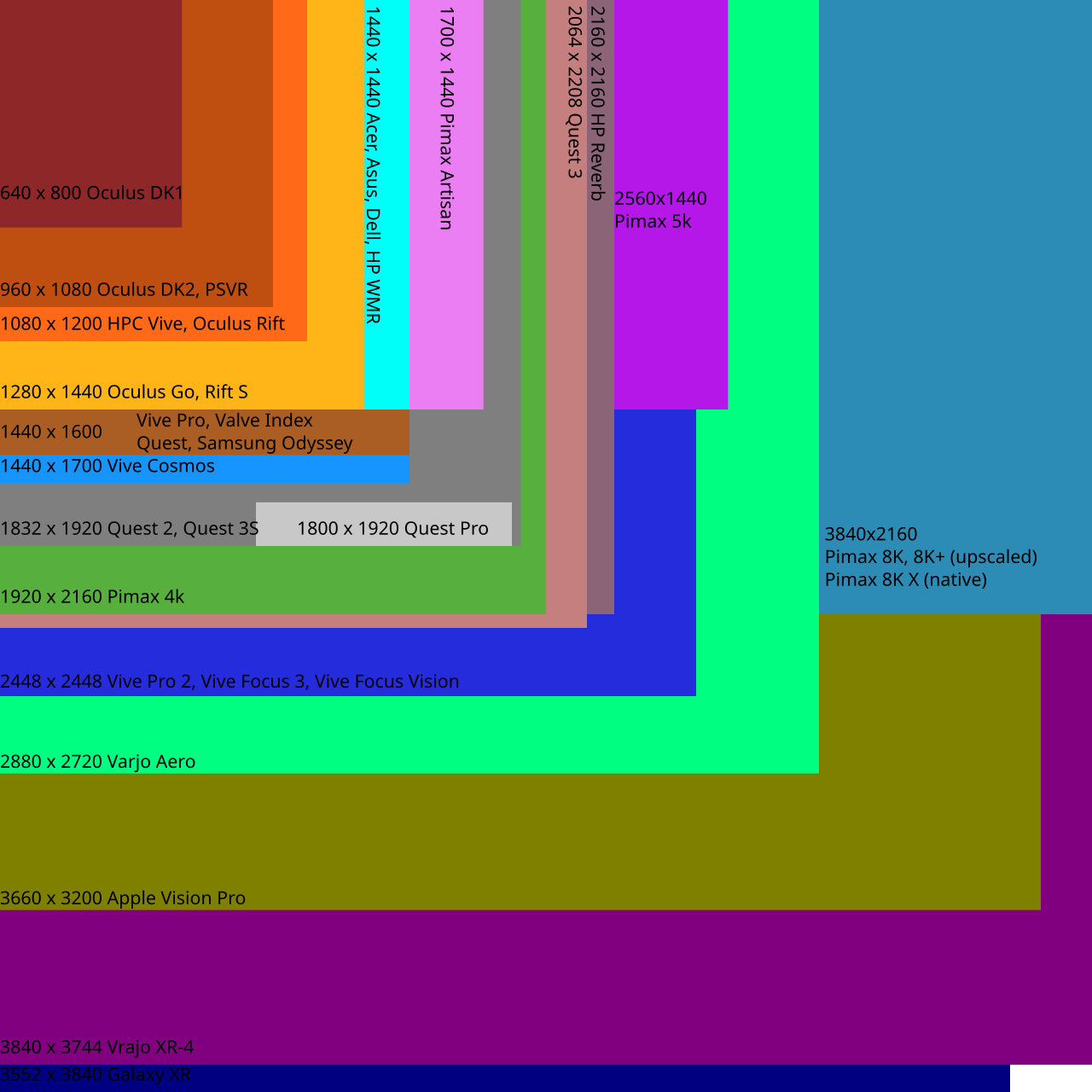
- Optical Fidelity and Display Quality: High-resolution displays (e.g., >4K per eye), wide fields of view (FOV), and excellent optics are vital for presenting clear, crisp stimuli. This reduces visual strain, minimizes the “screen-door effect,” and ensures participants can accurately perceive fine details, which is crucial for studies on perception, visual search, and reading comprehension. Headsets that minimize vergence-accommodation conflict are also preferred.
- Integration with Research Platforms: Seamless compatibility with leading biometric research platforms, such as iMotions, is a non-negotiable. This ensures synchronized data collection from multiple sources (e.g., EEG, GSR, facial expression analysis) and simplifies data processing, removing the need for complex plugins or workaround hacks. For a deeper dive into precision, you might find this guide useful: Unlock Precision: Eye Tracking VR Headsets for Gaming & Research.
- Robust SDK and API Access: For custom experimental setups, an accessible Software Development Kit (SDK) and API are essential. This allows researchers to integrate the headset's eye tracking data directly into their experimental software and develop bespoke applications.
- Comfort and Ergonomics: Research sessions can be lengthy. A lightweight, well-balanced headset with adjustable straps and suitable interpupillary distance (IPD) adjustment will enhance participant comfort, minimizing fatigue and potential data artifacts caused by discomfort.
- Passthrough and Mixed Reality Capabilities: For studies requiring interaction with real-world objects or blended virtual-real environments, high-quality passthrough (mixed reality) cameras are indispensable. This feature, exemplified by leading enterprise-grade headsets, allows for realistic engagement with both physical and virtual stimuli.
- Data Output and Sampling Rate: Ensure the headset can output gaze data at a sufficiently high sampling rate (e.g., 90Hz, 120Hz, or higher) for capturing rapid eye movements and micro-saccades, which are important in many cognitive studies.
Top Contenders for 2026: Leading Eye Tracking VR Headsets
As the market for eye tracking VR headset technology matures, several devices stand out for their suitability in scientific research. While specific models may evolve rapidly, the characteristics of top-tier enterprise-grade solutions remain consistent. The Varjo XR-4, as highlighted in expert analyses for 2026, exemplifies the pinnacle of what researchers should seek:
Varjo XR-4: High-Fidelity Mixed Reality for Perceptual Accuracy
The Varjo XR-4 is specifically engineered for high-precision mixed reality (MR) research, where unparalleled visual realism, spatial accuracy, and ecological validity are paramount. Its primary advantage stems from its superior optical fidelity and exceptionally high-quality passthrough cameras. This allows participants to engage seamlessly with both virtual and real-world stimuli, fostering perceptually accurate interactions that are crucial for complex research designs.
The headset's industry-leading display clarity enables the perception of even the finest visual details, such as small text, subtle luminance differences, and intricate environmental cues—elements often compromised or completely lost in lower-resolution systems. This commitment to visual precision not only contributes to significantly reduced visual strain for participants but also minimizes refocusing efforts, thereby enhancing the overall quality and reliability of gaze data. For experiments measuring nuanced visual attention, complex search behavior, or workload assessment, the XR-4's capabilities are invaluable.
In mixed reality protocols, the XR-4 facilitates realistic interaction with physical objects while maintaining a stable, low-latency fusion of virtual overlays. This makes it an ideal platform for studies in industrial design, medical training simulations, complex task analysis in human factors, and psychological experiments examining perception across real and virtual boundaries. Its “human-eye resolution” approach ensures that visual stimuli are presented as naturally as possible, mitigating artificiality that could impact experimental results.
While the Varjo XR-4 represents the gold standard, other emerging enterprise-grade headsets for 2026 will undoubtedly offer similar advanced features, focusing on robust eye tracking systems, high-resolution displays, wide FOV, and strong integration capabilities with research platforms. Researchers should always look for devices that prioritize data integrity and user experience to ensure the highest quality experimental outcomes. For a broader perspective on the current market, consider checking out Best Eye Tracking VR Headsets: Your 2025 Guide to Enhanced Precision.
Integrating Your VR Headset for Robust Data Collection
Possessing a top-tier eye tracking VR headset is only half the battle; integrating it effectively into a comprehensive research framework is where the true power of multimodal data collection is unleashed. This is precisely where platforms like iMotions become indispensable. As a leading platform for biometric research, iMotions enables synchronized data collection from a multitude of sources, transcending simple gaze tracking to include facial expression analysis, EEG, galvanic skin response (GSR), and more.
When your VR headset is seamlessly integrated with iMotions, it signifies access to reliable, high-fidelity gaze data accompanied by accurate timestamps, all without the frustration of wrestling with cumbersome plugins or makeshift workaround hacks. This level of integration ensures that all biometric data streams are perfectly aligned, allowing researchers to correlate visual attention with physiological arousal, emotional responses, or neural activity in real-time. Such multimodal insights offer a holistic understanding of human behavior in virtual environments.
Beyond raw data collection, a robust research platform facilitates the entire experimental workflow—from participant management and experimental design to sophisticated data visualization and analysis tools. This streamlines the process, reduces potential errors, and accelerates the pace of discovery, ensuring that researchers can focus on interpreting their findings rather than wrestling with technological complexities.
Conclusion
The landscape of scientific research is being profoundly reshaped by the advancements in VR technology, particularly the sophisticated integration of eye tracking. As we navigate 2026, the eye tracking VR headset stands out as an indispensable tool, offering unparalleled opportunities to explore human perception, cognition, and behavior with unprecedented objectivity and ecological validity. From delving into the nuances of visual attention in cognitive psychology to optimizing design in human factors, the ability to precisely track gaze within immersive environments unlocks deeper, more actionable insights.
Choosing the right headset involves prioritizing accuracy, optical fidelity, and seamless integration with robust research platforms. With cutting-edge devices like the Varjo XR-4 leading the charge and powerful platforms like iMotions unifying data streams, researchers are equipped to conduct experiments that were once confined to the realm of science fiction. The future of scientific inquiry in virtual reality is bright, promising a continued acceleration of discovery and a more profound understanding of the human experience.